Wednesday, 1 October 2014

Stoptoberfest

Into the Woods, October 2014 (C) S.Dickens
Well it's that time of year again: the nights are getting longer, the mornings mistier, and the leaves are drifting into satisfyingly crunchy piles. And here in the UK thousands of people are beginning a month-long festival of abstinence, under the banners of Stoptober and Go Sober. Motivations are various: for some it's about raising money for charity, for others a chance to give our poor besieged bodies and wallets a chance to recover from the summer before the excesses of Christmas begin. For many, I'm sure, it's an opportunity to weaken the power that these horribly toxic yet socially acceptable drugs seem to hold over us.

I'm really glad that I was able to stop smoking over a decade ago. I don't say that to be smug but just to let you know, if you're still stuck on the other side of that river, that it is possible to get across, and the grass really is greener on this side! Alcohol, I must confess, has been a trickier customer for me, but I think I can now say with some confidence that it no longer has a place in my life.

Thinking about the important and self-empowering step that these Stoptoberons and GoSoberites are taking, I found myself wondering: what compulsions am I still clinging to, what habits that no longer serve me?

I didn't have to think hard to identify the thing that I'm most "addicted" to. In this body, it causes horrendous, potentially lethal mood swings (sorry hubby), not to mention weight gain, bleeding gums and acne, and as a known inflammatory may even be exacerbating my MS. I'm talking of course about my arch nemesis: SUGAR. Of all my vices, this is the one that I would never have dreamt of relinquishing. But I have successfully let go of so many things that I would have considered "sacred cows" years ago: pizza, bread, cheese, even chocolate. So maybe now I am ready to stop hurting my body with sugar.

As for habits, it's clear to see that the habit that has the most profound impact on my health and wealth is my tendency to spend hours iGlued to my laptop watching junk TV or flittering around on Facebook. I know that doing so is depriving me of so much. Sadly my imagination is now so soggy from too much of the "idiot box", that I can't quite figure out what, exactly, I'm depriving myself of. But I remember vaguely that BC (before computers) I enjoyed a very interesting and active life. I wonder if I can still remember how to do that?

So, in the spirit of experimentation and in solidarity with those wise women and men who are turning their backs on their own addictions this October, I have decided that this month I will also drop my remaining addictions. I will consume no sugar, no junk TV (i.e. no to "junk", but yes to the occasional documentary or talk) and, toughest of all ... drum roll ... no Facebook!

No sugar, no TV, no FB for a month is an idea that fills me with horror. This is proof enough that I have an unhealthy attachment to these things. There is a rationale for cutting them all out at the same time though. As the Stoptoberons and GoSoberites probably know, or will soon discover, it's difficult to change an ingrained habit while still plugged into the media machine that got you hooked in the first place. Easier to just drop the whole lot, and as the old kids' TV programme used to say "Go out and do something less boring instead".

With less time wasted in front of the goggle box, I hope I'll be able to write more, so you may see some updates about my experiment here on the blog. Or I may be too busy writing my book, finding a job, walking in the woods, or skydiving...

In the mean time, you know where to find me - I'll be in "real time". Maybe I'll see you there?

Thursday, 11 September 2014

Watch and Learn

UPDATE

Tickets now available for UK Premiere: 9th Oct, London.

Online Release now expected: 15th Oct. 


The Connection: mind your body 
A new film about using your mind to heal your body.

Just a quick one to let you know about this new documentary due out next month. It's all about the connection between the mind and the body - and the good news that this offers all of us living with a chronic condition.

The documentary features inspiring success stories and international experts in this growing field, including Prof. George Jelinek, who devised the OMS programme. It also provides an overview of the current state of the new science of mind-body medicine.


Watch trailer here.

Online Release due: 15th October 2014.

Live cinema screenings in USA, UK and Australia.

UK screening: 9th October 2014, Kensington, London - details.


Tuesday, 9 September 2014

A moment of choice

Sometimes it’s amazing how easy it is to take for granted just how far I’ve come on this journey back to health, even to the point of sulking when this “miraculous” healing doesn’t fit my schedule. Sometimes I am ashamed of my own ingratitude at the great fortune I’ve had.

This is what depression does: it hides the good stuff and emphasises the bad. But I’m learning that life always gives me the opportunity to choose a different reaction, to step back and look again. That’s why I’m sharing this one with you, dear readers, because I think it’s good to be honest about just how stupid we can be sometimes, and how simple it can be to make a better choice.
I walked for over two hours today, across country, up and down hill, with nothing but a five minute sit-down along the way. I didn't use a stick or lean on my husband. I didn't stumble. I didn't feel pain.

I feel miserable, defeated. Why? Because after walking for over two hours, I am now too exhausted to walk back. I'm sitting here in the middle of nowhere waiting helplessly while my husband walks all the way back to the campsite alone to get the car so that he can pick me up and drive me back to base. I wanted to train for my sponsored walk today, but I failed completely, and ruined my husband's day in the process.

Just a few hours ago I was blissfully happy, relishing the warm autumn sunshine, the spectacular Carmarthenshire countryside, and the unfamiliar sense of freedom, being able to just keep walking without worrying, without pain. What changed? Has all that disappeared?


By dosh13, via Wikimedia Commons
Suddenly the early evening sun catches the leaves and grass around me, in four dozen greens and yellows, and I hear myself exhale deeply. A surprising little thought slips quietly into the back row of my mind: What if I chose not to see this as a failure? What if I could play "Pooh" in this story instead of "Eeyore"?

It's a seductive idea. I try it on for size, testing how it might be to feel "ok anyway", checking that it will take the weight of my cynicism. It holds; I can trust this. I realise that it's safe to make a new choice, and let go and relax into that.

I begin to notice more: the sounds of the kids playing in this park where I'm sitting, the heaviness beginning to release my tired feet and legs. I check my watch and realise that my husband will get here soon. I'd better make the most of this moment of quiet in the sunshine while I can. I begin to feel excited to be here in this little village park in the Welsh countryside, so far from the racket and tension of the city, and the gloom of my ordinary life. An hour where I can only sit and rest, and “just be” in this moment - what a gift!

I walked for over 2 hours today, across country and up and down hill, with nothing but a five minute sit-down along the way. I didn't use a stick or lean on my husband. I didn't stumble. I didn't feel pain.

I feel proud of a great achievement and grateful for my health. What a difference a moment makes.

Tuesday, 22 July 2014

K.B.O.

I'm a great believer in mottos. I love words and I am always collecting new favourites: words and sayings that grab me for one reason or another. I especially cherish the ones that make me laugh or help me to feel strong.

So it's quite fitting that I recently adopted a bon mot of the inimitable Winston Churchill, who would sign off his messages and phone calls with the acronym "KBO". It meant, of course, "Keep Buggering On" and brilliantly encapsulated the kind of grim determination that saw Britain through the war years. I thought I only liked it because it made me laugh, but I've just had a clear lesson in what it actually means in practice.

Yesterday, I was so exhausted, so totally debilitated by this MS fatigue, that I decided to scrap all my plans for the day and stay in bed. It was not a happy day. I don't fare well when I'm home alone for long periods, with no energy to do anything "useful". I don't imagine anyone does. And doubtless it contributes to my depression. So last night I made a gentler, less intensive plan for today. Crucially, it included my first visit to a mindfulness class that I've just discovered.
When I woke up this morning feeling even more exhausted than the day before, I was absolutely gutted. Another day of cancelled plans, mooching around the house feeling sorry for myself? Initially, yes, that's exactly how it was.

BUT THEN...

After a bit of complaining to the OH, a couple of hours of sulking, and a super-nutritious juice, I suddenly found the will to force myself to leave the house. Yes, my legs felt like lead weights, but I wanted to go to that class, dammit! And getting there has made all the difference to my day. I feel at least 20% more energetic than when I woke up, and 100% more positive.
Did I drop off during the meditations? I think so.
Am I still exhausted? Yes.
Do I now feel better, emotionally and physically, than if I'd stayed in bed? Absolutely!

Of course I'll now have to make sure I don't overdo it and I get appropriate rest tonight, but I'm beginning to understand that for me, self-care doesn't mean wrapping myself in cotton wool and it doesn't mean always pulling out of something just because I'm feeling rough.

Today I learned that KBO is more than just a wry motto. For Churchill's Britain, it meant fighting on even when they felt there was no fight left in them. For me, it means marshalling the power of my will to push through all the obstacles that would prevent me doing what I know I need to do to get better. Even if part of me doesn't want to do it.

Friday, 11 July 2014

Too stressed to meditate? Try this.

Since I started thinking about this post yesterday, I've had a perfect opportunity to test this out today, and can absolutely swear that it works!

If, like me, you ever find yourself too stressed or too busy to sit down and meditate, you can still calm your mind and your body using this insanely simple technique. I discovered it in Dr Andrew Weil's audiobook, "Breathing: The Master Key to Self-Healing", which has a whole toolkit of breathing techniques. But the one I'm playing with this week is, in my opinion, the simplest and most powerful.
Dr Weil calls it "Making your breath quieter, slower, deeper and more regular". Mmm, needs a catchier name perhaps. I'll call it the breathing magic trick.

All you do is exactly what it says. Sitting in the comfortable position of your choice - it's probably best with a straight but relaxed spine, but let's not get too hung up on that - you simply slow down your breaths, making each one a bit longer, a bit deeper, a bit quieter. Continue for as long as it's enjoyable. It doesn't matter what your mind does while you're doing this; it's a body-based practice. It's not even meditation, if that's a word that freaks you out. But it does have an amazing effect on your body, and then a knock-on effect on your mind. Try it and see what I mean!
To really have fun with this, I combined it with something I picked up in a course recently, which suggested aiming to slow your breaths to 4 per minute. That's 4 inhalations and 4 exhalations. It sounded a bit extreme at the time, but I tried it and it really isn't. I simply look at the second hand on my watch as I breathe in quietly, slowly and deeply for 1, 2, 3, 4, 5, 6 seconds ... pause for 2 seconds, breathe out for 6 seconds, pause for 2. Before you know it, you're breathing at 4 breaths a minute. Apparently doing this regularly calms the sympathetic nervous system, which is responsible for the fight-and-flight response. So it helps to combat stress, adrenal fatigue and inflammation.

I don't know if that's true, but I do know that when I tried this today, in the midst of a stressful day involving a funeral, a 6 hour train journey and the London Underground at rush hour, it instantly calmed me down and kept me calm. And I was able to continue breathing slowly and calmly even while negotiating a path through the commuters in the tube station.

There's definitely something magic about this breathing business. I think I'm going to be hooked. I can think of worse addictions to have!

Monday, 7 July 2014

How do you milk an almond?


I've been playing in my kitchen this weekend, trying out some new dishes that might make my life with the OMS diet a bit simpler, without losing the pleasure of good food. I'd love to say that all my creations were gourmet masterpieces, but the only real stand-out success was my almond milk.
When offered a latte made with fresh almond milk, the OH thought it was hilarious that I was just popping into the kitchen to milk an almond.


He knows, of course, as I'm sure you do, that almond milk is simply a tasty alternative to dairy that is mostly almonds and water. You can buy it in most supermarkets these days, and I consider it healthier than soya milk and creamier than rice milk.

But I've been trying to make my own that doesn't have added fats. The organic brand I've been buying did list "cold-pressed sunflower oil" in its short list of recognisable ingredients, making it preferable to the brands with all sorts of "industrial" substances in. The trouble is, these lists don't tell you what they've actually done to the ingredients, so it's difficult to know whether the oils have been cooked. (For a full explanation of the dangers of heat-treated (cooked) oils, check out the OMS book or website). The stuff in cartons is also quite expensive.

Yesterday, I think I finally cracked it. So, and I hope I haven't bigged it up too much, here is my recipe for the yummiest, purest almond milk I've tasted so far ....


Almond milk (makes 660ml, approx. 3g sat fat total)


  • 75g whole almonds (brown skin on)
  • filtered water
  • several grinds of sea salt
  • pinch ground cinnamon
  • 1/4 teaspoon ground vanilla (or 1cm vanilla pod or 6-8 drops vanilla extract). Use more for a sweeter flavour.
  • 4-6 drops almond extract

Soak almonds overnight / 8-12 hours in enough filtered water to cover.
Rinse.
Put almonds in a blender with 800ml filtered water, salt, vanilla, and almond extract, and blitz until the "bits" are very small.
Pour mixture through a fine sieve - here you could use nutmilk bags if you have them, but my fine metal sieve seems to work just fine. Allow the milk sufficient time to strain. Relax, hum a tune - you know what comes to those who wait, don't you?

If you're catering for picky eaters you may want to repeat this straining process to get every last particle out. I didn't bother, and I thought it was yummy anyway - it's a bit like finding the odd stray coffee ground in the bottom of your cup.

Pour the strained almond milk into glass bottles and store in the fridge, if you can bear to not drink it straight away! I've designed my recipe to make 660ml because I happen to have 2 dark glass 330ml bottles (that once had Purdey's in). 

As always, you can experiment with the flavours. I found this didn't need anything to sweeten it, but for a sweet tooth you can add more vanilla. I was surprised to discover this was good in tea as well as on its own. It would also be great in smoothies, but mine didn't last that long! 

Thursday, 3 July 2014

Answers are easier to hear when you shut up and listen

So I asked the question: "How do I rebuild myself?" Then I shut up long enough to hear my first answer already!


Sometimes, if we're lucky, or blessed, or someone somewhere is praying for us (thanks, Mum-in-law!) or it's just our turn - the answers come. 

Anyway, I don't know why, but through a sequence of coincidences something has already found its way into my lap that is, quite unmistakeably, part of the answer to a question I've been asking for a while. Let me tell you about it ...


Question: How can I learn to love myself when I don't?

I've known for a long time that to truly heal my body and brain I need to heal my relationship with myself. I mean that I need to love myself. I know this is a phrase that many of us find uncomfortable. It sounds like conceit, or worse - self-helpy, new-age fluff.

But when you actually think about it, it's the height of conceit to think that it's good to love other people - our entire post-Christian morality is founded on loving your neighbour and so on - but it's not acceptable to love ourselves, as if we were somehow different from everyone else on the planet!

But anyway, it's not a logical argument for most us. We have just learned to think ourselves unloveable, to feel at a deep, unconscious level that we do not deserve love. And I believe that unconscious drive can lead to chronic illness and persistent depression. 


Tougher question: How can I change an unconscious belief?

The problem with unconsciously held beliefs and feelings is that, of course, you can't talk yourself out of them. You can't just take a "logic pill" to make it go away. You can't even take a "self-love pill" or a "happy pill", although many have tried!

I've been grappling with this conundrum since the early years of my depression. I've tried talking cures and anti-depressants, emotional healing techniques, prayer and retail therapy. Most of what I've tried has helped a bit, some has helped a lot, and some has just helped my credit card company. 


An answer? Why not start here...

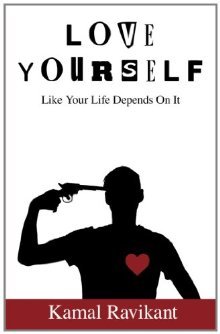
Love Yourself Like Your Life Depends on ItBut here, in this small but powerful little e-book, I think I've found some answers that are already helping me. It's called, rather brilliantly I thought, "Love yourself like your life depends on it". When I read the title I had to buy it because that's exactly what I feel to be true for me. This is not a book by a psychologist, therapist or guru. It's a book born out of real experience. It's short because the guy doesn't need to lecture at length to show off his knowledge. It's potent because it contains a true story and some simple things that you can learn in seconds and practice in minutes - every day for the rest of your life if you want to. 

I'm not sure how much more to say, because I don't want to plagiarise the author. But I'm so grateful to him, and to whatever grace is leading me right now. 

Grateful, grace-ful and feeling bloody great-ful!